
Home / Pallet Racking
System 02
Pallet racking for intake and bulk storage
Documents arrive by the pallet. Heavy duty racking rated to 3,000 kg per level keeps the intake zone flowing instead of becoming a floor stack.
Where it earns its place
Every record centre has a zone where volume arrives faster than it can be indexed: corporate transfers, branch consolidations, end-of-retention returns. Handling that flow on shelving forces staff to break pallets down before anything can be put away, which is slow and is where most handling injuries occur.
Pallet racking absorbs the peak. Pallets go up as they arrive, get indexed on schedule, and move to long-term retention on the mezzanine when there is time to process them properly.
Also used for
- Static archives that are never retrieved individually, only in bulk
- Media and IT asset storage where crates are heavy and irregular
- Empty box and consumables stock feeding the operation
- Client-owned equipment held under storage contracts
| Load per level | up to 3,000 kg (uniformly distributed) |
|---|---|
| Frame type | SPR — omega profile upright |
| Height | up to 13 m, no splice |
| Levels | 3–6, set by pallet height |
| Connection | Bolted beam |
| Handling | Forklift / reach truck |
| Steel | JIS G3101 SS400 / JIS G3131 SPHC |
| Accessories | Column barrier, wall & row spacer, safety pin |
Layout
Where pallet racking sits in the building
Next to the dock, not deep in the building
Intake racking earns its keep by being close to where pallets land. Every extra metre between dock and rack is repeated on every pallet, every day — and in a facility receiving several transfers a week that distance quietly becomes a labour cost nobody has budgeted.
Aisle widths follow the truck, not the drawing
Counterbalance forklifts, reach trucks, and pallet stackers each need different clearances. We ask which equipment you actually run — including the oldest unit in the fleet, since that is the one that sets the constraint — before fixing aisle dimensions.
Designed for damage that will happen
Uprights in an intake zone get hit. That is not a failure of discipline, it is the nature of the work. Column barriers, wall spacers, and row spacers are specified as standard, and frames are designed so a damaged upright can be replaced without dismantling the run.
Feeding the mezzanine
In most record centres the two systems work as one flow: pallets in at the dock, indexed on schedule, then broken down into boxes that move to long-term retention on the mezzanine. Designing both at once keeps aisles and traffic routes aligned instead of fighting each other.
| Counterbalance forklift | Wider aisle, lower cost equipment |
|---|---|
| Reach truck | Narrower aisle, greater lift height |
| Pallet stacker | Lowest cost, limited height and speed |
| Damage protection | Column barrier, wall and row spacer |
| Replaceable frames | Bolted — single upright swap possible |
| Typical zone | Dock-adjacent intake and bulk storage |
Reference — pallet racking
Pallet racking we have installed
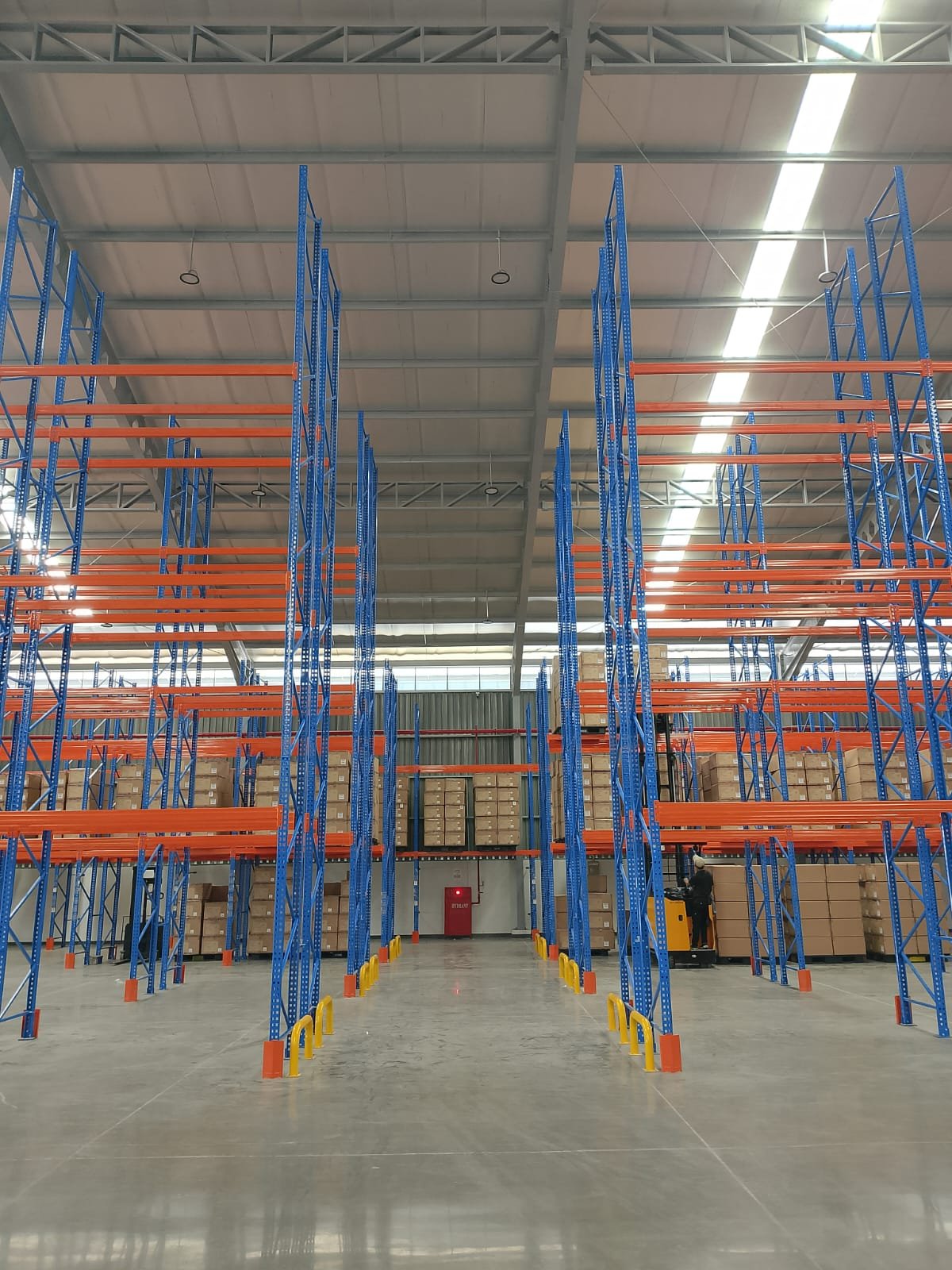
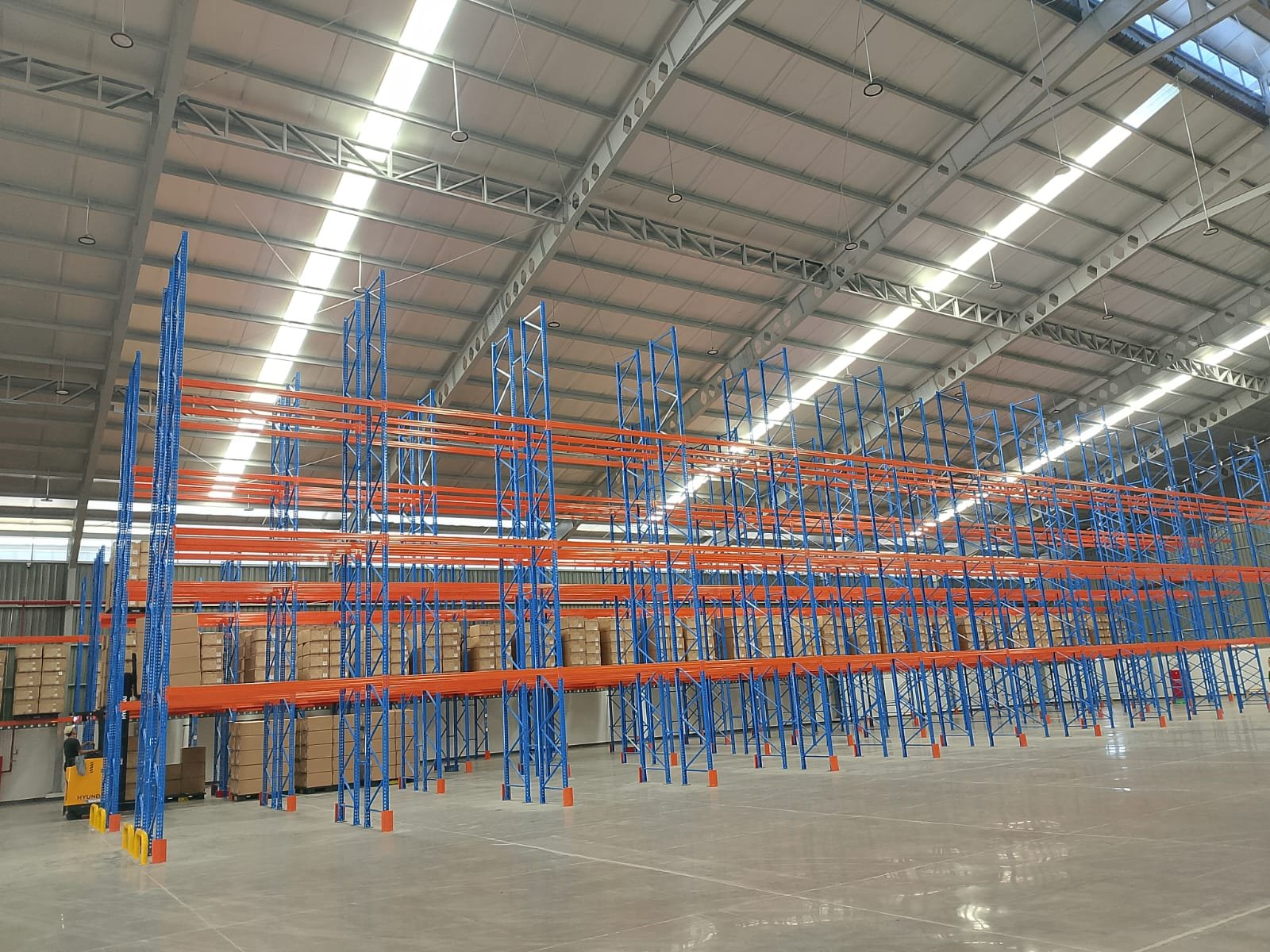
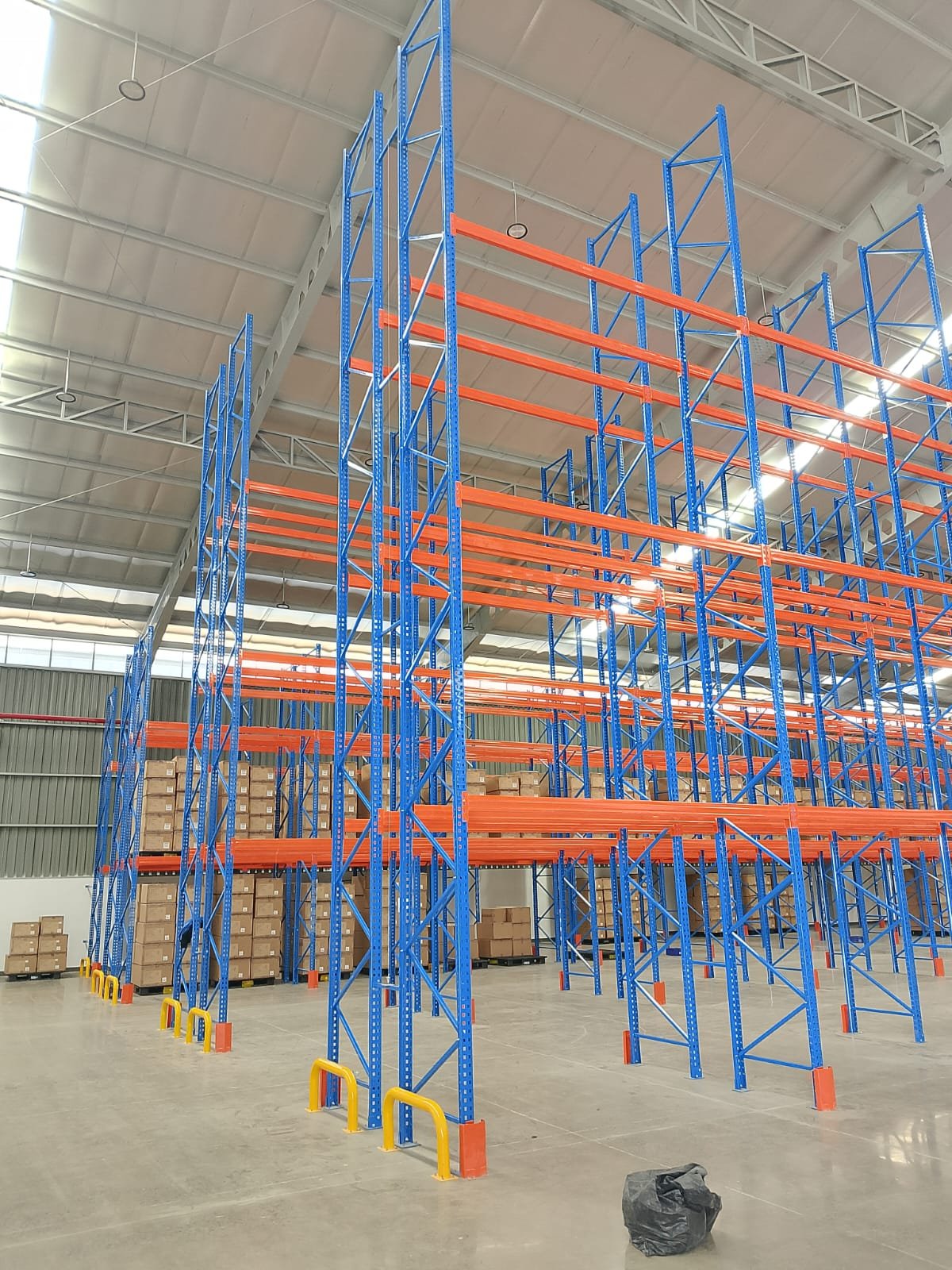
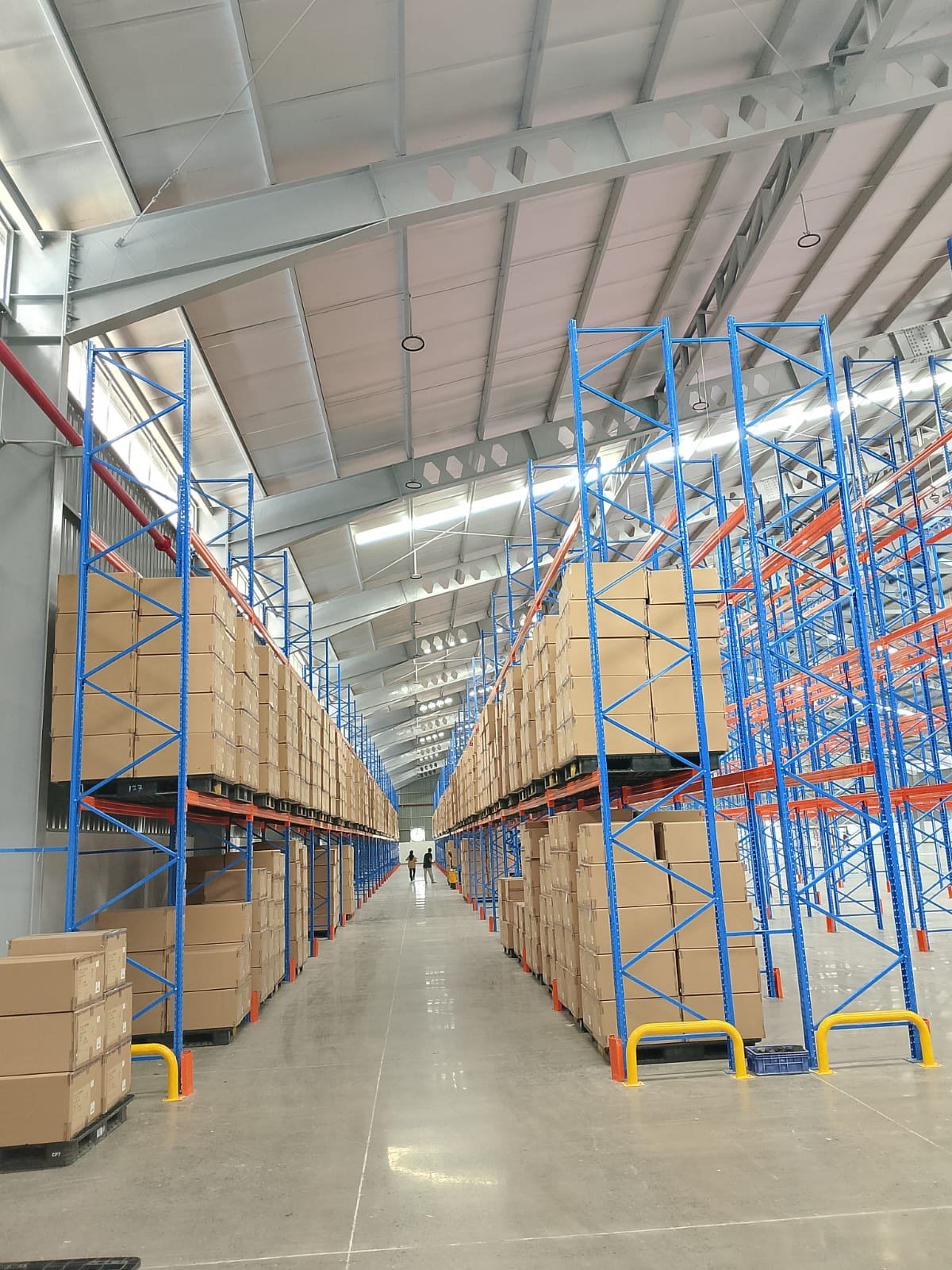
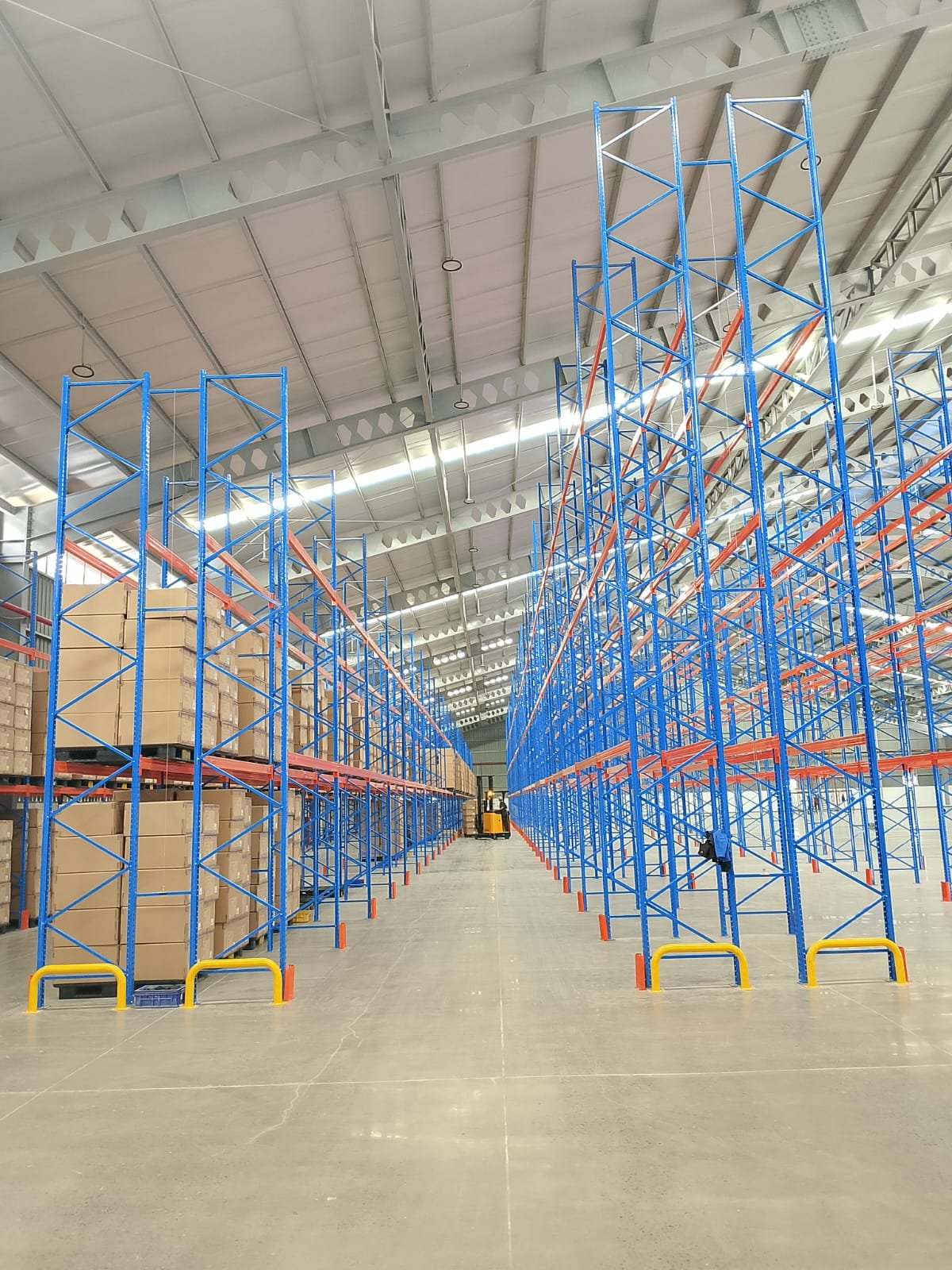
Reference photographs of heavy duty pallet racking fabricated in our Bekasi plant. Beam levels, bay widths, and upright heights are set per project.
Swipe to see more →
FAQ
Questions about pallet racking
Why pallet racking in a document facility?
Because intake volume rarely arrives box by box. When a corporate client transfers an archive, it comes palletised, and handling it on shelving means breaking down pallets by hand before anything can be stored.
Can pallet racking and mezzanine share one building?
That is the usual layout: pallet racking in the intake and bulk zone, mezzanine in the long-term retention zone. Both are designed together so aisles and traffic routes line up.
What height can the uprights reach?
Frames can be fabricated up to 13 m without a splice, so there is no joint acting as a weak point. Practical height is normally limited by your forklift lift height rather than by the frame.
Intake zone turning into a floor stack?
Tell us the arrival volume and pallet dimensions — we will size the intake racking around it.